
Sovereign of the Seas" - Lord of the Seas - model
Product code: 224786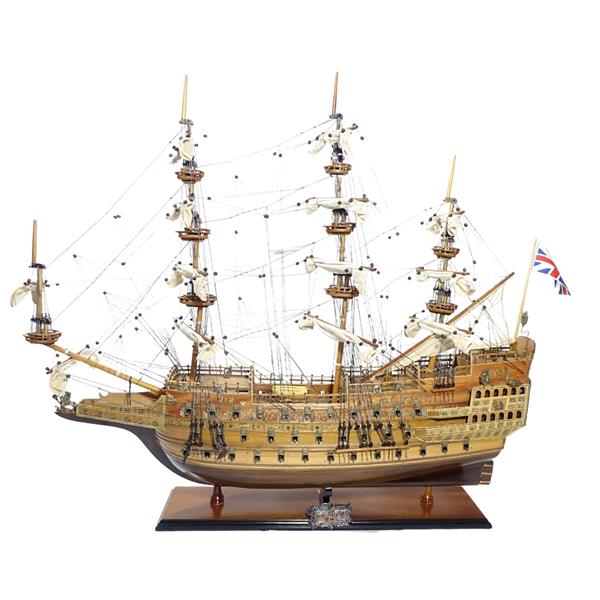
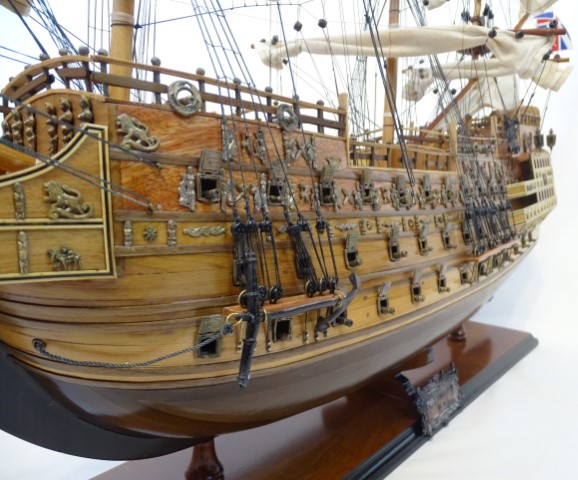
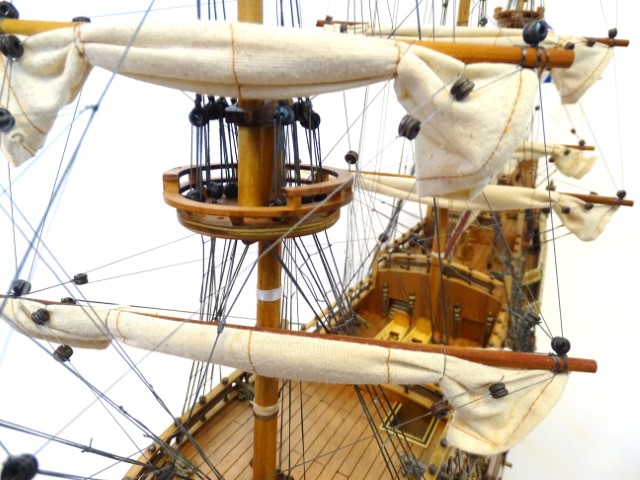
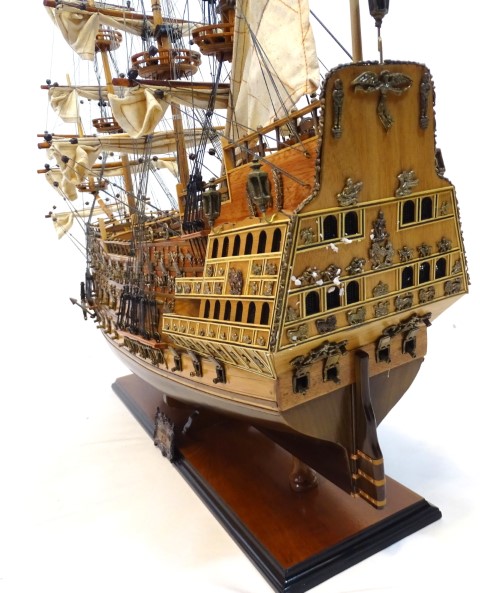
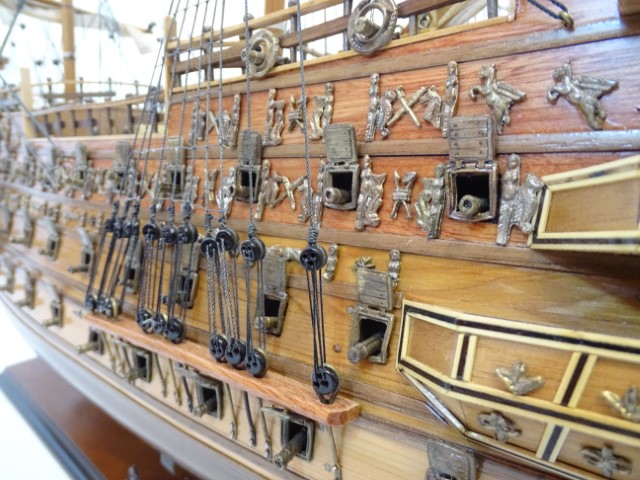
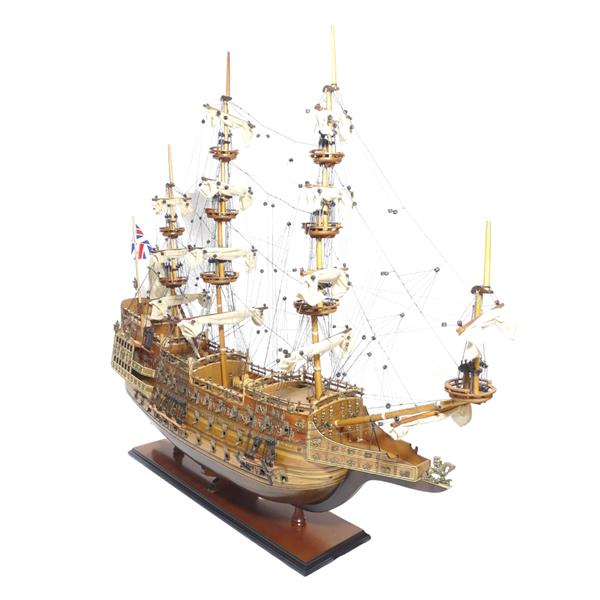
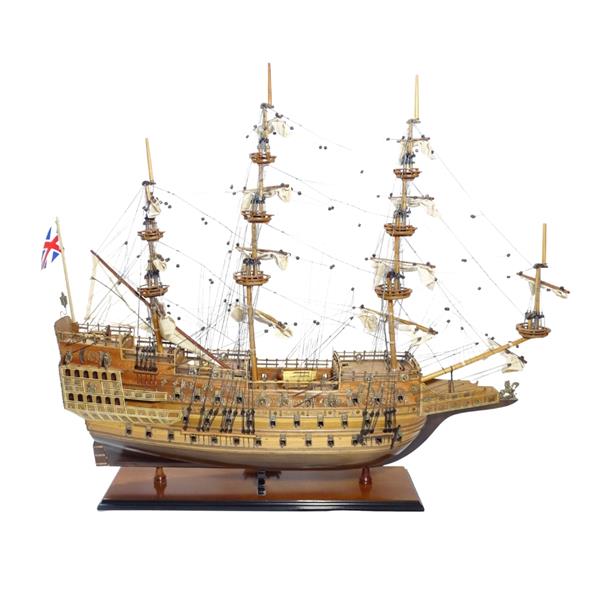
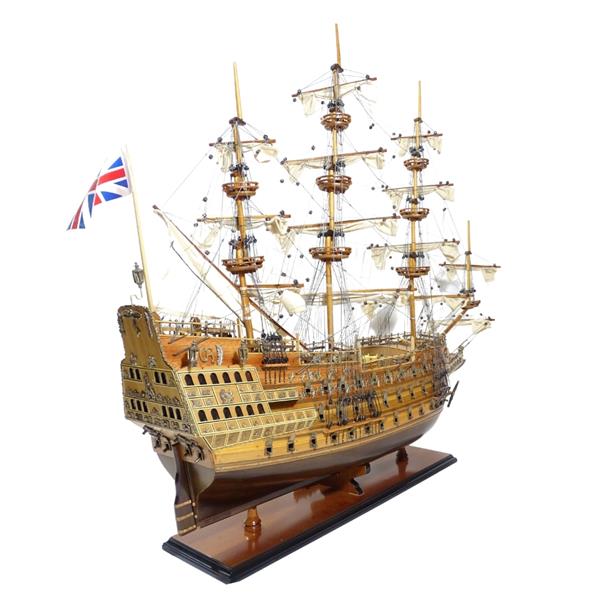
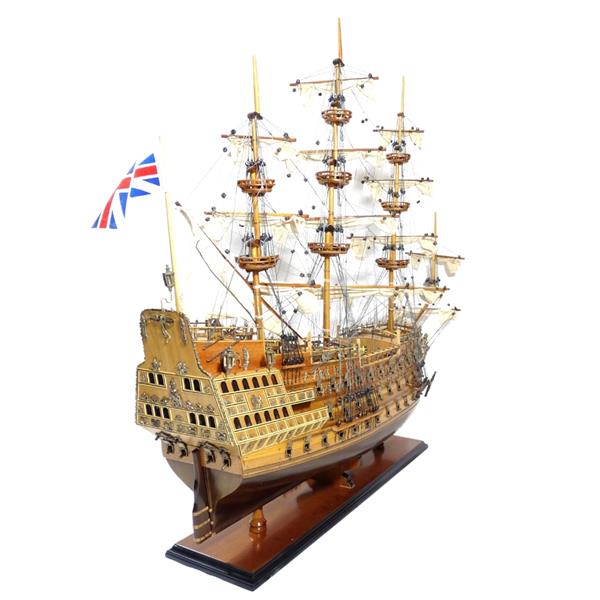
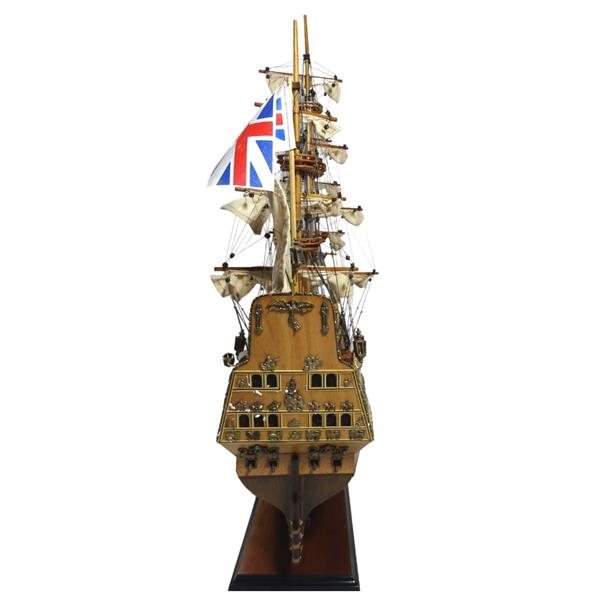
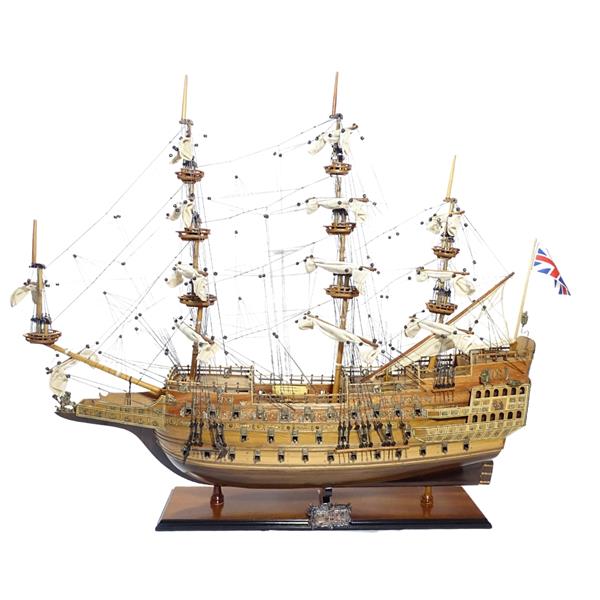
"Sovereign of the Seas" - Lord of the Seas - model of the legendary British navy ship
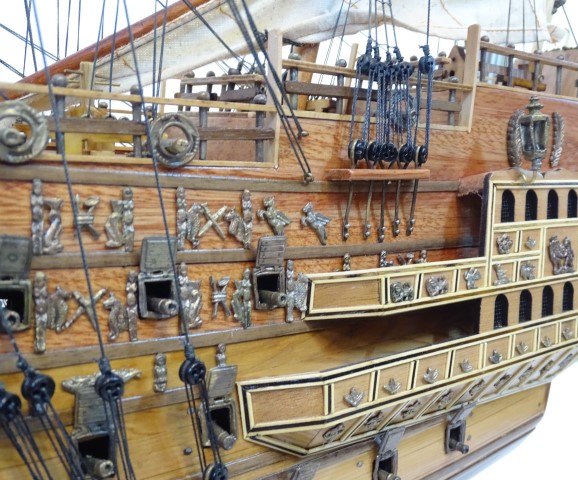
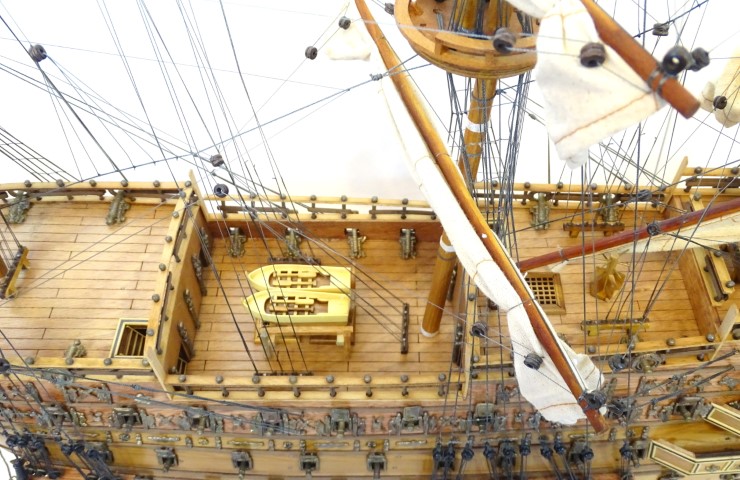
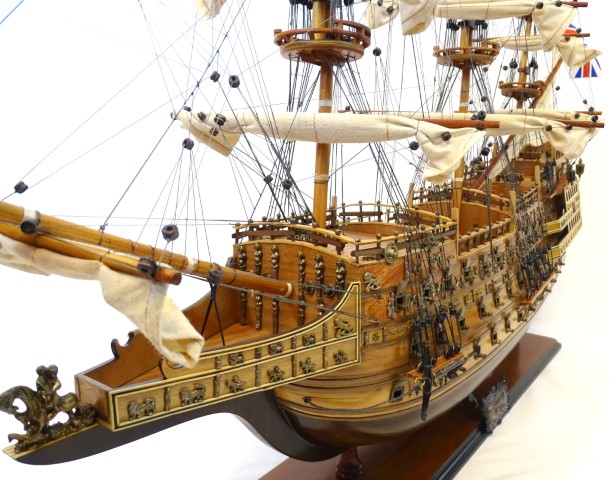
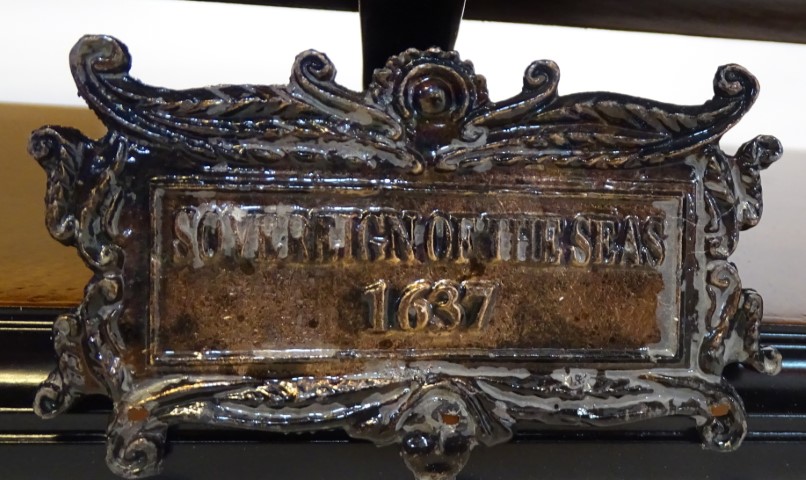
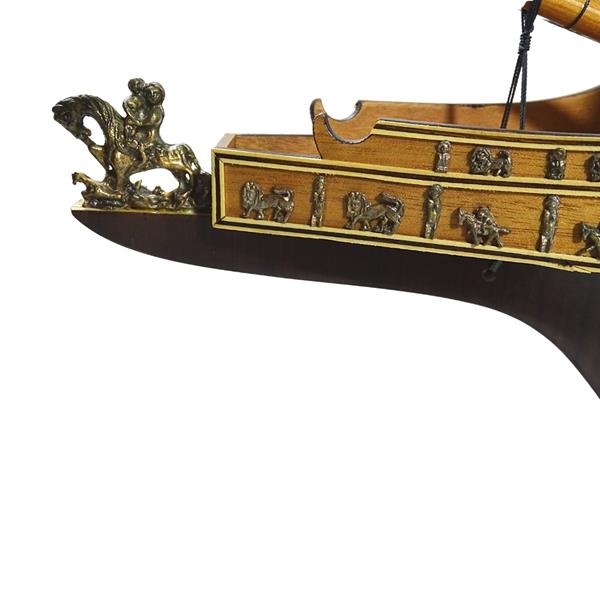
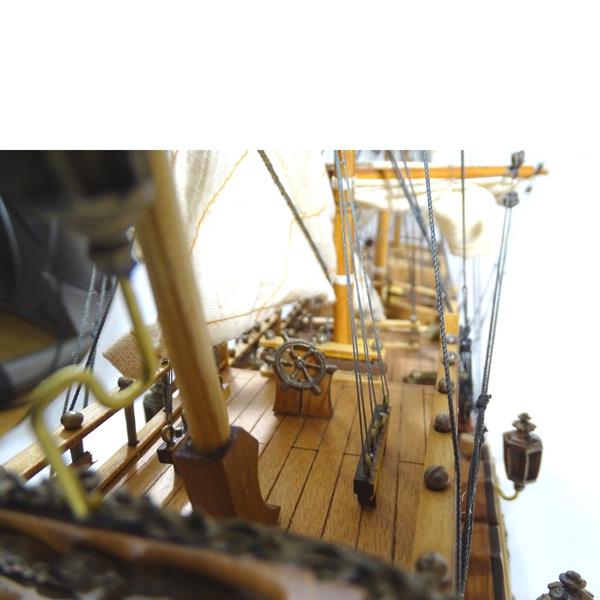
We present to you a fully assembled model - a replica of the H.M.S. Sovereign of the Seas. Its construction was made thanks to the careful analysis of historical engravings. Constructed from several types of wood, including cedar and mahogany, using the technique of ships built in the past. The production of this model took several hundred hours of work. The hull and masts, the material, the sails are wooden. Anchors, 3 rows of cannons from each side, statuettes, lanterns are elegant metal elements. The model is placed on a wooden base with a brass nameplate. The details of the ship's equipment were taken care of, e.g. hand-made lifeboats or brass statuettes.
Dimensions:
Length 88.9 cm
Width 29 cm
Height 94cm
A great gift for a history lover, a perfect decorative element that will give your interior a unique character.
The ship was commissioned by King Charles on June 26, 1634. As the cost of building a representative ship amounted to an enormous sum of £ 65,586 at that time, it was necessary to introduce a special Ship Money tax to finance it. The construction of the ship was a conscious political goal, calculated to increase the authority of King James I (who showed absolutist tendencies) and to strengthen the prestige of the English monarchy. The name "Sovereign of the Seas" - Lord of the Seas - was not given by chance. It was supposed to symbolize the ancient right of the English monarch to use the title Rex Marinum, meaning "Lord of the seas", allegedly derived from the Anglo-Saxon King Edgar. It was very expensive to arm the ship, as the king ordered all guns to be cast in bronze, which, although lighter, was four times more expensive than cast iron. The 90 guns were supposed to cost £ 20,592 initially, but when the weapons were increased to 102 guns, the cost increased initially to £ 24,447 and then an additional £ 1,700.
The ship took part in the First Anglo-Dutch War, serving mainly as the flagship of the commander-in-chief of the republic's fleet, Admiral Blake. The ship made a great impression on the Dutch, who nicknamed it the Golden Devil (Hol. Gulden Duvel), and set a high reward for the captain of the ship, who would have managed to destroy it. On September 28, 1652, "Sovereign" took part in the victorious Battle of Kentish Knock, during which it ran aground.
After the restoration of the monarchy in England in 1660, it was incorporated into the Royal Navy and renamed the Royal Sovereign. Then the ship took part in the second naval war against the Netherlands, which broke out in 1665. On July 25, 1666, in the Battle of North Foreland "Royal Sovereign", the flagship of the fleet under the command of the Duke of Albemarle, together with "Royal Charles" fought the Dutch flagship "De Zeven Provinciën", which, despite the English superiority in artillery, ended in serious damage "Royal Charles". The two-day battle ended with the victory of the English.
Royal Sovereign also took part in the next Anglo-Dutch war in 1672. A year later, the ship took part in the lost double battle of Schooneveld and the Battle of Texel, which ended with the same result. The Royal Sovereign was the flagship of it.
The Royal Sovereign then took part in the war against France. In 1690, the naval battle of Beachy Head, victorious for the French, took place, in which he also took part as the flagship of the First Lord of the Admiralty. Two years later, in the decisive naval battle of La Houge, the combined Anglo-Dutch forces inflicted heavy losses on the French fleet. Later, the Royal Sovereign no longer took part in battles, gradually deteriorating at the port of Chatham, where it fell victim to a random fire that destroyed the ship completely to the waterline on January 27, 1697.
- UPC
- 5902067224786
- Product code
- 224786